
Koi do not eat by the calendar. They eat by water temperature, oxygen, and filter maturity.
Koi do not eat by the calendar. They eat by water temperature, oxygen, and filter maturity.
Warm water raises metabolism, appetite, and waste production. Cold water slows digestion and also slows the bacteria that process ammonia. That is why the same handful of pellets can be harmless in summer and risky in cold spring water.
Field Method
Use this guide as a practical field check, not as a one-time reading. Koi systems reward routine: the same small observations, recorded weekly, reveal whether the pond is improving or drifting toward stress. Start with water movement, solids removal, oxygen, and feeding pressure before buying more equipment.
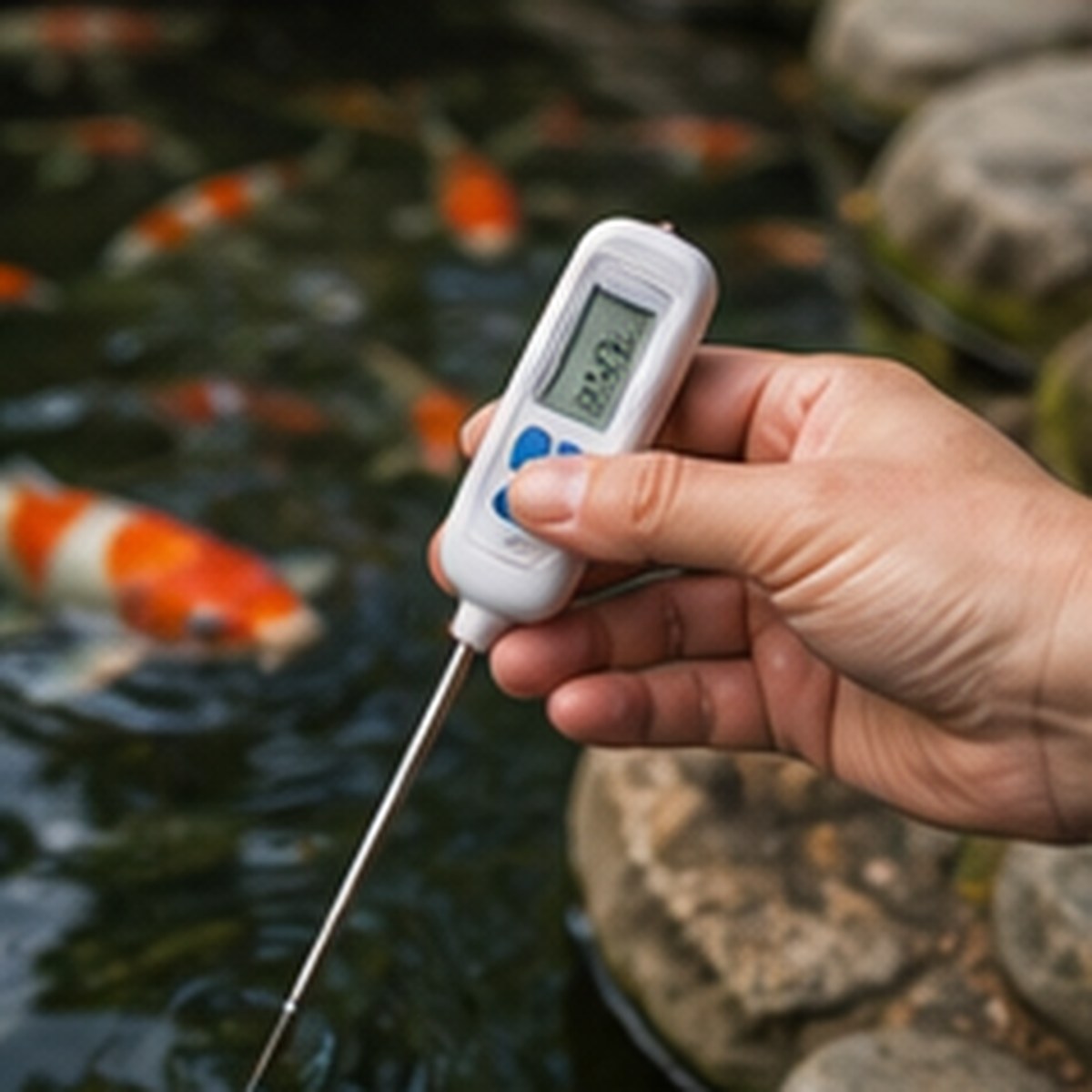
- Check water temperature at feeding depth, not only air temperature.
- Below about 50F, pause routine feeding and watch behavior instead.
- In the 50F to 60F range, feed lightly with easy-digest food only when fish are active.
- Above 65F, increase frequency gradually while testing ammonia and nitrite.
What Owners Miss
The risky habit is feeding because koi beg at the surface. Begging shows interest, not digestive capacity. If food is still visible after a few minutes, the ration was too large for that moment.
A useful rule is to change one variable at a time. If you clean the filter, change food, add treatment, and replace water on the same day, you may not know which action helped or harmed the pond. Slow documentation is faster than repeated emergencies.
Simple Tracking Table
| Check | Good sign | Action if unstable |
|---|---|---|
| Water test | Ammonia and nitrite stay at zero | Reduce feeding, add aeration, review filter load |
| Fish behavior | Active, balanced, steady appetite | Observe closely and compare with prior notes |
| Filter flow | Even return flow with no odor | Clean mechanical stage and inspect restrictions |
Why It Pays Off
Temperature-led feeding keeps growth, color, and water quality aligned. It also turns feeding time into inspection time: watch which fish arrive late, which stay low, and which spit food out.
For a premium koi pond, the goal is not a perfect reading on one afternoon. The goal is a pond that remains understandable: you know what normal looks like, you know which numbers move first, and you know which maintenance step is due next. That is the difference between owning water and managing a living system.